


Short answer: If the plant is a perennial, probably not. If it was a tender tropical or annual, probably yes, it is dead. Texas A&M produces a lot of good things, including a large plant-focused research- based website at aggie-horticulture.tamu. edu. Aggie horticulturists define perennials as “plants that persist for many growing seasons.” Annuals are “plants that perform their entire life cycle from seed to flower to seed within a single growing season.”
Short suggestion: Research the plant, starting at aggie-horticulture.tamu. edu. If the plant was a tenappendages tropical or an annual, dig it up and throw it away. If it is a perennial plant or tree, keep the plant or tree where it is and as it is. Do not cut off branches or foliage, even if it looks dead. Continue regular water, fertilizer, and weed care until the end of May.
If the perennial plant or tree has not leafed out by then, it probably cannot and will not. If you can stand it, wait until July to see if the plant will come back from the roots.
When you determine the plant is still alive and leafing out then you can cut off the clearly dead limbs. Removing dead and diseased structures in the plant prevent further disease and open up the plant for sunlight and air flow.
We chose to live in northeast Texas, so we gardeners must expect the unexpected in our flower beds, gardens, orchards, and woods. It really can be 84 degrees F on a beautiful April morning and then drop to 28 degrees F by dinner time. Scientists at the Texas A&M research site in Overton, Texas have kept records since 2000 on the last winter/spring freeze dates (etweather.tamu.edu). The last freezes in Camp and Titus counties occurred as early as February 10 (2001) and as late as April 15 (2014), so another 2023 freeze is possible.
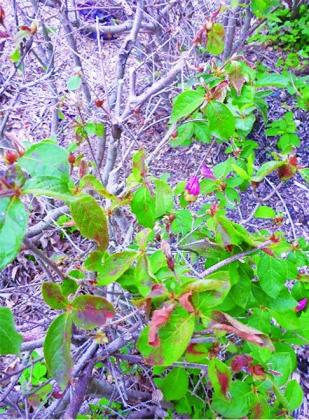
Some plants around our property came through the freeze well. Phlox, quince, roses, and spirea all look great. Many plants in our gardens and orchards show significant freeze damage. The tops of these re-blooming azaleas froze, while the rest of the plant continues to leaf out and to bear flowers. These althea (Rose of Sharon) bushes have dead leaves, but tiny secondary leaves are beginning to appear. Some of the branch structure may have frozen as well, so we will wait for complete leaf out before making any pruning cuts.
Some fruit-bearing plants and trees were hardhit, depending upon their flowering schedule. Our early blooming blueberries lost about 50% of their blooms and it looks like we will lose some stems as well. Again, we’ll wait until everything is leafed out before we prune anything.
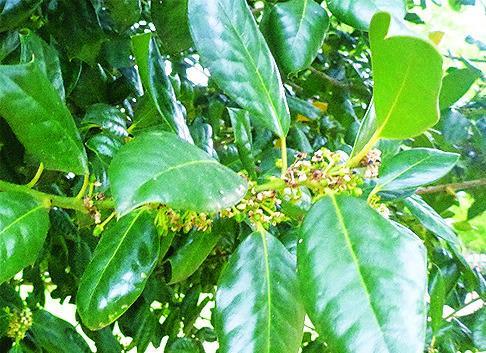
This American holly tree had flowered just before the freeze, so the individual flowers froze to the detriment of the honeybees who love to collect nectar from them. However, God has designed the holly to rebloom, therefore the honeybees will get their nectar and the birds their winter berries!
With respect to food crops, one way to ensure a partial crop even with a late freeze is to plant varieties which produce at different points in the season. We have four different blueberry varieties, Brightwell, Climax, Powderblue, and Tiffblue, for exactly this reason.
Similarly, we have four different pear varieties, Kiefer, Moonglow, Orient, and Warren, for not only freeze insurance but also for fireblight resistance.
Your mother probably taught you not put all your eggs in one basket. This also holds true for home agriculture. Plan for multiple varieties of flowering and fruiting plants and trees in your landscape to provide insurance against a total crop failure.
Take-aways after a late-winter freeze:
•Research your plants and discover their requirements and characteristics. Perhaps you have the wrong plants for our USDA cold heartiness zone (8a).
•Buy and install plants and trees suitable to northeast Texas weather, soil, and water conditions.
•Be patient with your plants and with people. Give the strong roots time to recover.
•Share great plants – and Good News – with your family, friends, neighbors, and the ones you meet buying plants. You will not regret the investments.
Late freezes happen in northeast Texas, so be prepared for them with a variety of good plants and a positive attitude.