
We plant and maintain hundreds of trees, shrubs, and flowering plants on our property. Each plant must earn its place in our landscape or orchard.
The minimum level of acceptability is that the plant achieves its purpose; roses are fragrant, fruit trees and bushes bear edible fruit, bee forage provides nectar at the right times, and purple flowering plants make us smile. The highest level of horticulture praise goes to trees and plants that are “Strong and Stunning,” Texas Superstars. There aren’t many of these.
Some plants look great online, but they are difficult to hard to propagate, and finicky to grow. We do not choose these plants. Some plants require special soil, weekly spraying, and a carefully controlled environment. We do not choose these plants. Some plants thrived where we used to live and are readily available, but they cannot take life here in northeast Texas (Yes, that’ll preach!). We do not choose these plants.
Instead, we choose plants that earn the label “Strong and Stunning.” We buy some, trade for others, and propagate from them all. Propagation, the making of new plants from existing ones, may involve sharp knives, root stock, and flexible tape as Roger grafts persimmons. Propagation also includes digging up and dividing existing plants into several more.
What do we do with all these new plants? Some we add to our landscape, others are replacements for plants that died or were eaten, and most them we give away. We regularly load the pickup bed with scores of hardy young trees and sturdy plants and give them to beekeepers, gardeners, neighbors, and newcomers.
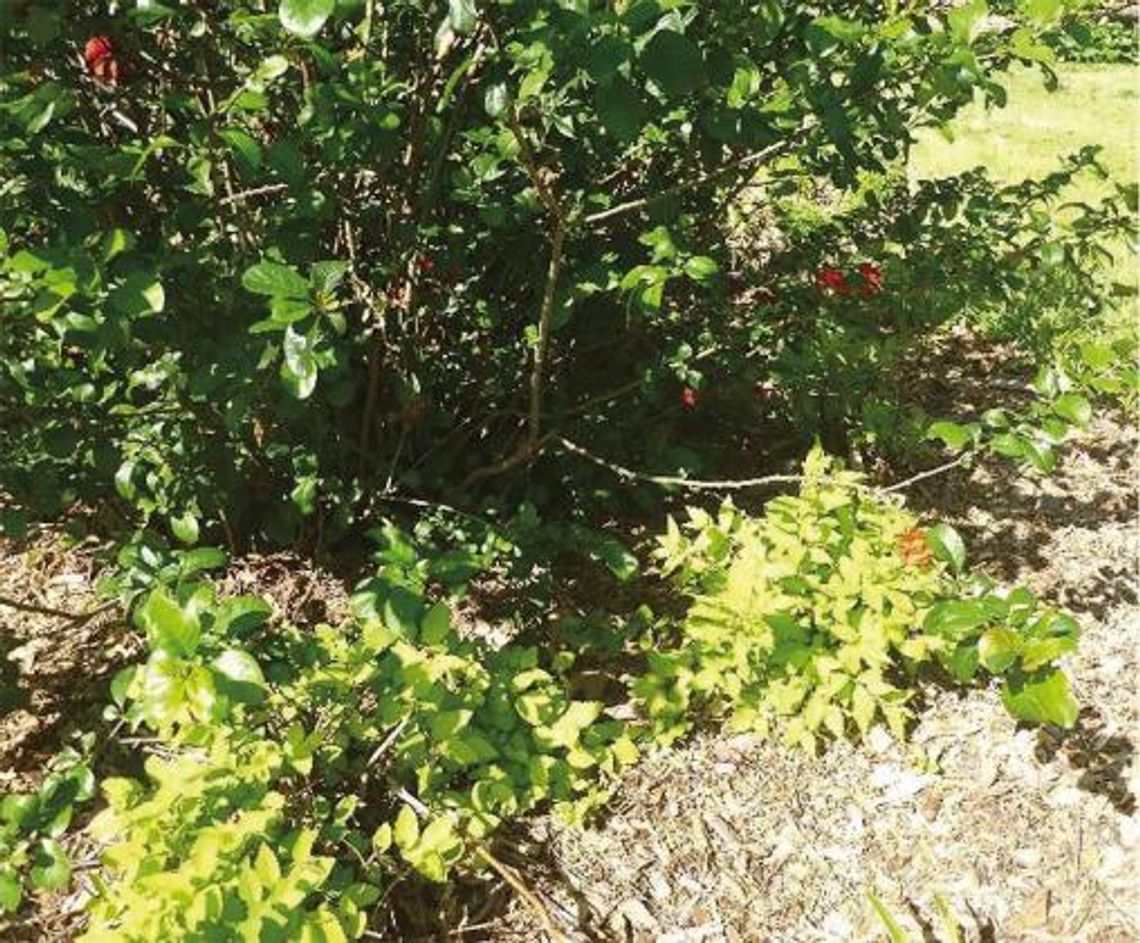
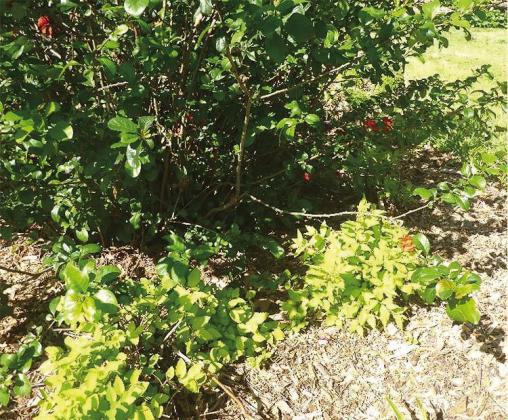
One plant stands out as a consistent performer and a welcome gift: Gold Mound Japanese Spirea. This photo shows Gold Mound under a flowering quince. The contrasting colors, of dark green quince and vibrant light green are nice. This tough, dainty, and colorful perennial is a reliable foundation shrub.
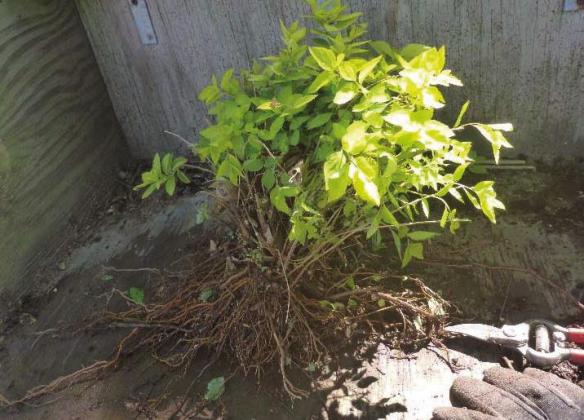
It is compact, orderly, airy, and easy to maintain. It thrives in full sun and is undaunted by summer heat and drought. It grows best in acidic to neutral soils. Its chartreuse foliage stands out in the landscape. Pollinators visit the pale pink flowers. Gold Mound is deciduous (loses its leaves after frost), but it is hardy to -30 degrees F; we did not lose any spirea plants to snowmageddon! Gold Mound is easy to propagate via division. In late winter we dig up the entire plant as seen in the picture. It comes up quite easily if you dig it up every few years. If necessary, use a sharp shovel to literally cut the plant into fourths right through the center, as you would a pie. You can then simply untangle the roots by hand to produce more plants that are rooted and ready to go into your landscape.
The last picture shows the plants ready to be divided and potted up. This one Gold Mound Japanese Spirea produced about 60 new plants! For the cost conscious, we’ve seen two-gallon plants, the size we dug up, sell for $60 and the new one-gallon plants, like those we potted up sell for $15-20 each. This is how you turn $60 into $1200. If you wanted a side-hustle in making and selling plants; be sure to check the Texas Department of Agriculture Nursery/Floral regulations as you will need a permit and possibly an inspection (to prevent the spread of pests and diseases) before you can legally sell live plants in Texas.
Texas A&M Extension has not yet named Gold Mound Japanese Spirea as a Texas Superstar, but perhaps they will. In the meantime, locate some Gold Mound and see if you, too, think it is “Strong and Stunning.” We encourage you to put this plant in your landscape and enjoy its no-fuss functional beauty. Beekeepers, gardeners, neighbors, and newcomers, what’s not to like about Gold Mound Spirea?
Choose this plant!