


That is the question we asked a horticulturally savvy friend (we’ll call him K) about eight years ago when our three-year old pecan suddenly died. K asked a few questions: Had we had sprayed an herbicide (No), Are other trees in the area dying (No), and Have you seen any animal activity (No).
Then, K asked us to go over to the tree and see if we could pull it from the ground. Really, we thought? This is a bare-root pecan tree planted three years ago and by the way, pecans have a long tap root, which was 30 inches long at planting! He insisted we go pull on the tree. All the while we’re thinking about the Scripture in Luke 4:5-11, where the Apostle Peter objects at Jesus’ bidding for him to throw the net out of the boat again for a catch. Peter says they have fished all night (using lanterns to draw the fish) and caught nothing, but at Your request (in broad daylight) we will throw them out again. Their catch was so other boats had to help them haul it all in.
So, we reluctantly went out and pulled on the tree, It popped out of the ground with a simple tug! The roots had been chewed off cleanly, so it was a wonder the tree was still standing. We hunted around a bit and found tunnels leading directly to the pecan tree. We had our culprit, or rather we knew what he was. This was our first introduction to moles in Texas.
What could we do about the moles? Voles? Gophers?
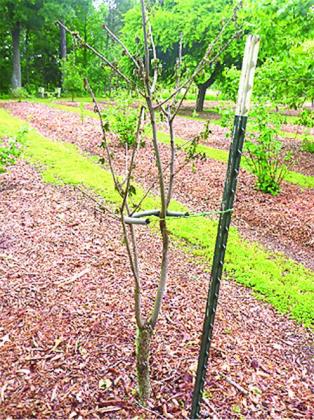
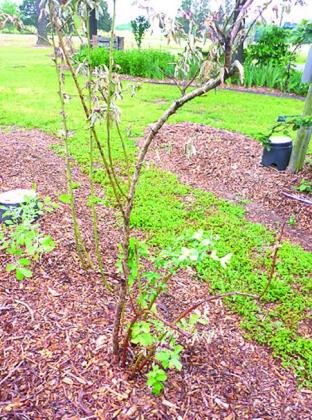
Well, K and our local AgriLife agent said we could try trapping or poisoning them. You can read how to do this in the publication Managing Mole Damage at agrilife.org. Or, said K, “You can be thankful you have acidic, sandy, and fertile soil that will grow most anything and 45 inches of rainwater a year. Just plant a few extra trees, some for you and some for the wildlife, including the tunnelling critters.” Sage advice which we’ve followed ever since. Our latest adventures in tree loss were a five-year old Japanese persimmon tree and a four-year old blueberry bush. Three days before the pictures these trees were healthy and setting fruit. Then the moles came. I dug up the trees and found that several of the main roots were cut. Again, I could see the run and unfortunately, our tree and bush were right in the middle of it.
What were the moles looking for? This from theAgriLcontinue ife publication on Managing Mole Damage: “The principle diet of moles consists of earthworms, grubs, beetles, and insect larvae.
Vegetation occasionally makes up a small portion of their diet…Moles destroy only a few plants or bulbs by direct feeding. The main damage is done when plant roots are dislodged as the animals tunnel through the soil in search of insects.” Frankly, the options to control moles, in our opinion, would require more effort and cost than the losses we’ve suffered of losing a few young trees and bushes. Older trees and shrubs usually deal with the root damage and move on. We have begun to take K’s advice and now plant extra of most any food crop or ornamental. Land is not an issue for us, and we have learned to propagate many plants, including trees, shrubs, and woody perennials, which provide ready, low-cost replacements.
However, the best advice we’ve received is, “Do not put another plant back into the same hole where you’ve just lost a plant to moles.”
“Fool me once, shame on you. Fool me twice, shame on me.,” seems an apropos saying to apply to burrowing creatures and to life in general.