
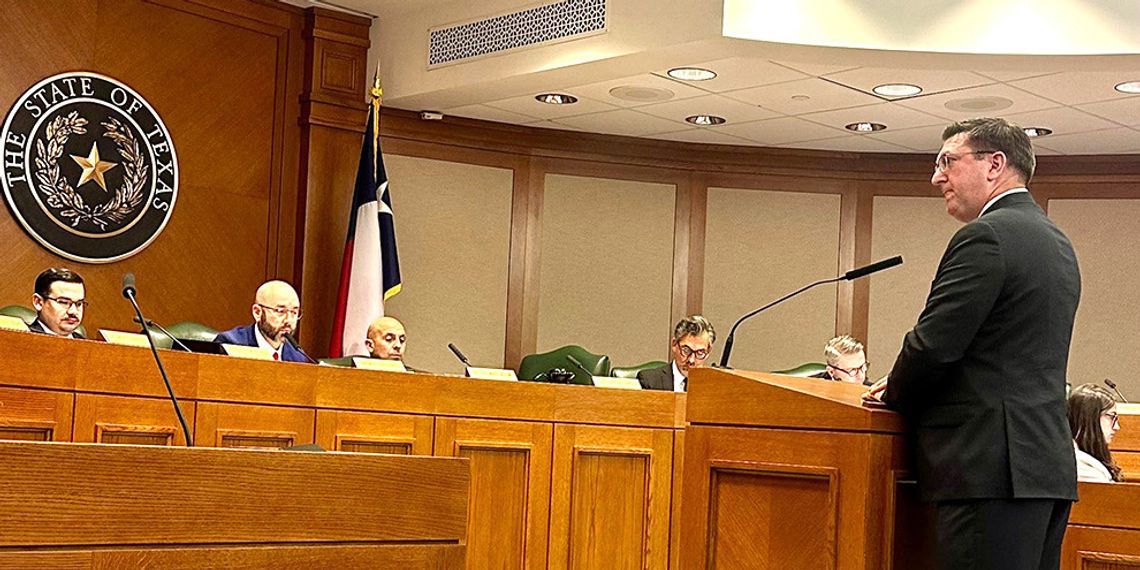
House Bill 2109, authored by House District 1 Representative Gary VanDeaver, was heard in the House Natural Resources Committee last week, with many from Northeast Texas making the trek to Austin and waiting all day for their turn at the podium to voice their opinion. Hundreds of Northeast Texans have also submitted written public comment on HB 2109.
House Bill 2109 as proposed states that if a current water project has been a piece of the official Texas Water Development Board state plan for 50 years or more, without any construction being done, it would be removed for consideration.
The proposed Marvin Nichols Reservoir, the behemoth water project and land grab in the Sulphur River basin, has been a part of that water plan since 1968, putting it at 57 years. The new legislation, if passed, erases it.
One of those to speak in favor of the legislation was Cass County Judge Travis Ransom. Ransom told committee members, “In 1968 tens of thousands of acres of private land was burdened with the ominous designation of “potential future reservoir site.” This designation did not come with any compensation to landowners. This government taking is difficult to fully comprehend. The concept of diminished value is well understood in the insurance world. If two cars appear equal but one has a car fax report indicating it has been in an accident, that vehicle won’t fetch the same price. Similarly, If two pieces of land are equal, but one comes with the designation of potential future reservoir site, which one will you build your legacy on? For over 50 years private landowners have been kept in limbo, not knowing if they should plant trees, develop their property, or start selling dirt before it’s all under water. Local school districts, municipalities, and counties, reliant on local ad valorem property taxes have also been in limbo. How do they plan for a potential loss in taxable property and for the long term lack of development on property burdened with this proposed future reservoir site designation? Texas has to figure this out whether it’s a land grab for high speed rail or for water, Texas property rights are at stake. This bill is a pro private property rights bill that says enough is enough. Set a deadline and stick to it. Let’s honor our commitment as Texans to protect property rights for the next generation.”
Many others waited for their few minutes to share their opinion.
Former Rivercrest ISD Superintendent Stanley Jessee noted that 30,000 acres of the school district would be lost to the proposed lake and that living under the threat for more than 50 years has crippled the district’s plans for the future.
Local landowner Angie Turner, whose family owns farm and ranch land in Cuthand, focused her time on telling the lawmakers of her family who has lived on their farm since 1852, since before Texas was even Texas. Turner, a teacher for more than 35 years, told the committee members that people like her family are now endangered, threatened by a proposed reservoir that would take their land by eminent domain. Jim Thompson, who works for Ward Timber and is also the Region D director, told the legislators that the possible 200,000 acres that could be taken by eminent domain is home to rare bottomland hardwoods and would be lost forever if the lake was approved.
One other that spoke against the monster land grab in Northeast Texas was business owner Cebron O’Bier who warned the lawmakers of the proposed lake’s footprint resting on the Talco-Mexia Faultline and the dangers involved with putting a reservoir on such a sensitive area.
After all of the testimony was heard, the committee voted unanimously to leave the bill pending marking a significant step forward in seeing the bill go to the House floor for a vote.
May 12 is the deadline for House Bills to be voted out of House committees, so there is still time to contact your representative and the members of the Natural Resources Committee to voice your opinion.